
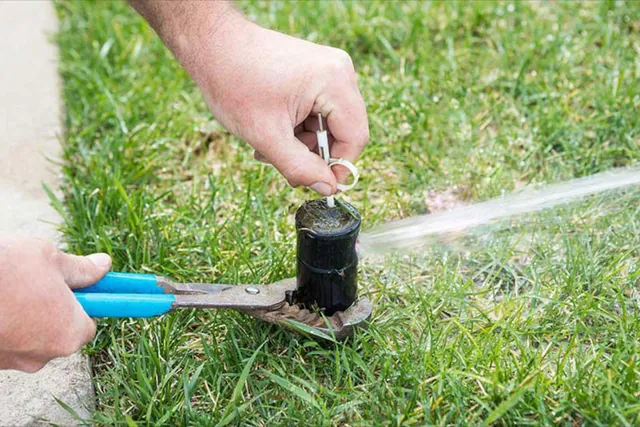
The irrigation blow-out is the cheapest service on the winter list and the most expensive one to skip. Water left in a line does not politely drain away — it freezes, expands, and splits fittings underground where you will not find out until May.
Why draining is not enough
Most systems do not fully drain by gravity. Lines follow the grade of the yard, which means low points hold water no matter how long you leave the valves open. Heads themselves retain water, and so do backflow assemblies — which, being above ground and usually brass, are the most expensive single component to replace.
A blow-out pushes compressed air through each zone in turn until the water is out of it. It takes an hour on a typical residential system.
When to do it in the GTA
Late October into November, before the first hard freeze. Not the first frost — a light frost does nothing to a buried line — but before the ground itself starts to freeze. Waiting for a convenient weekend in December is how people lose a backflow preventer.
What failure actually looks like
- A zone that will not build pressure in spring — usually a split lateral, somewhere under the lawn
- A backflow assembly weeping or cracked — visible, and the costliest part
- Heads that spray sideways or not at all because the internal assembly cracked
- A wet patch in the lawn that appears whenever that zone runs
The repair is rarely the fitting itself. It is finding it, which means excavating a lawn that had just recovered from winter.
Do it with the rest of the shutdown
The blow-out belongs in the same visit as the last cut, the leaf clean-up and staking the property for snow. Bundling them is cheaper than four separate trips, and it means nothing gets forgotten because the weather turned early.
If you bought a house with an existing system and nobody has told you where the controller and shut-off are, find out before October. We check both as part of a first blow-out.
Free estimate
Questions about your own property?
Call or text 647-621-8592, or send a photo and the address.